THE JOB
A hole that will not wear
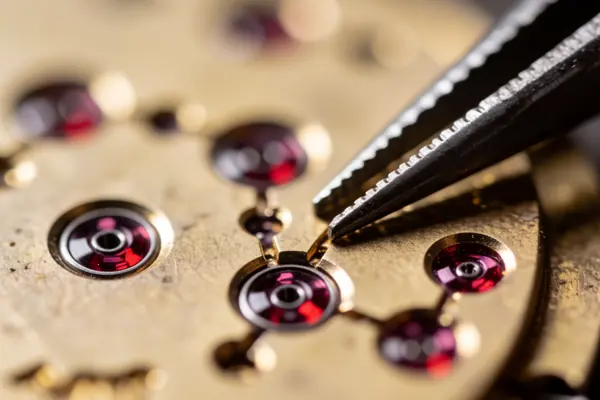
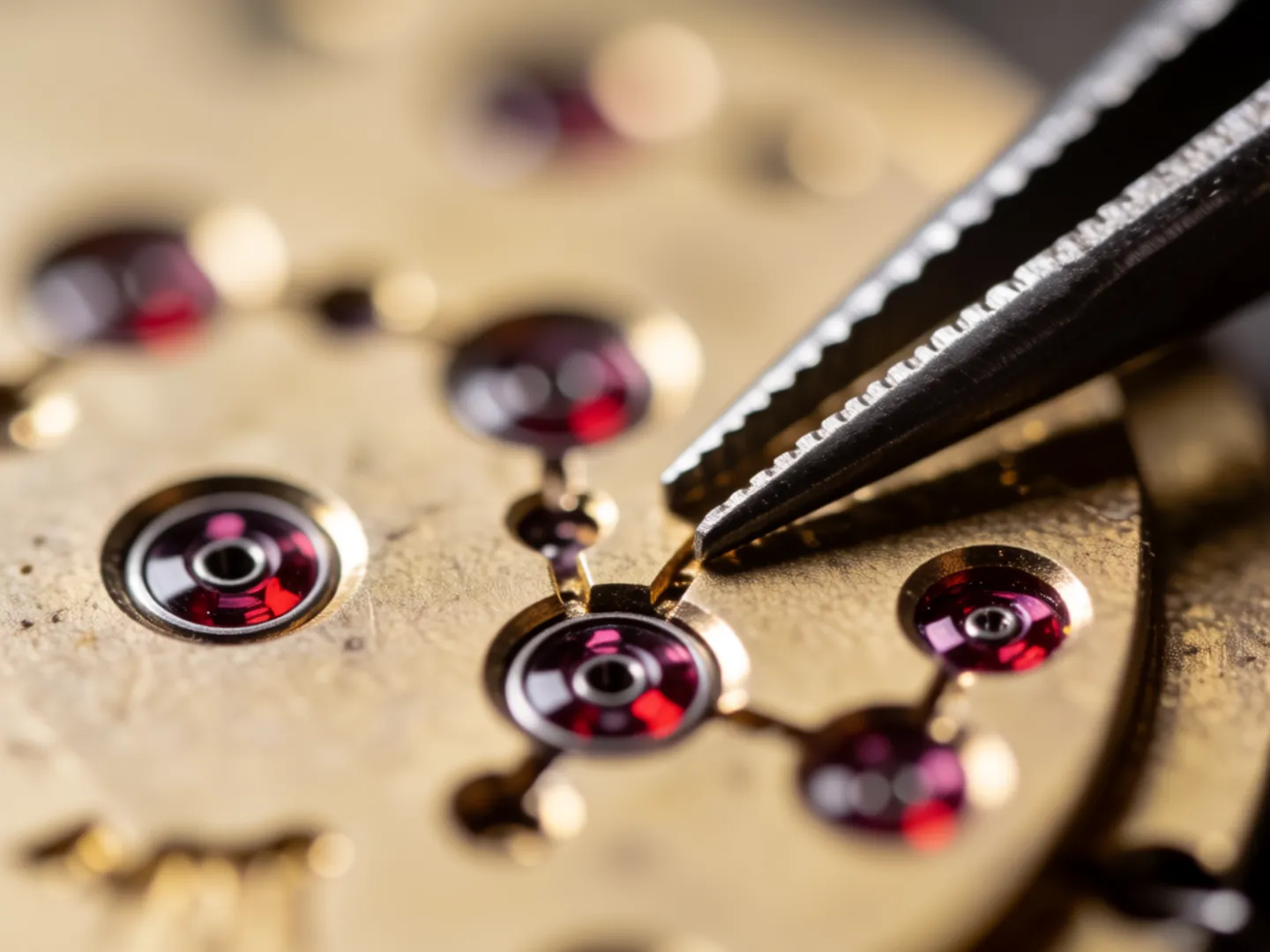
The Science Museum Group explains that in better watches, bearing surfaces such as pivot holes can be made from precious stones like ruby because they are hardwearing.
How it works tabjewel
JEWELS AT WORK
Some of the hardest-working jewels never leave the house.
HARD STONE slow wear
1704 Year of the jewel patent
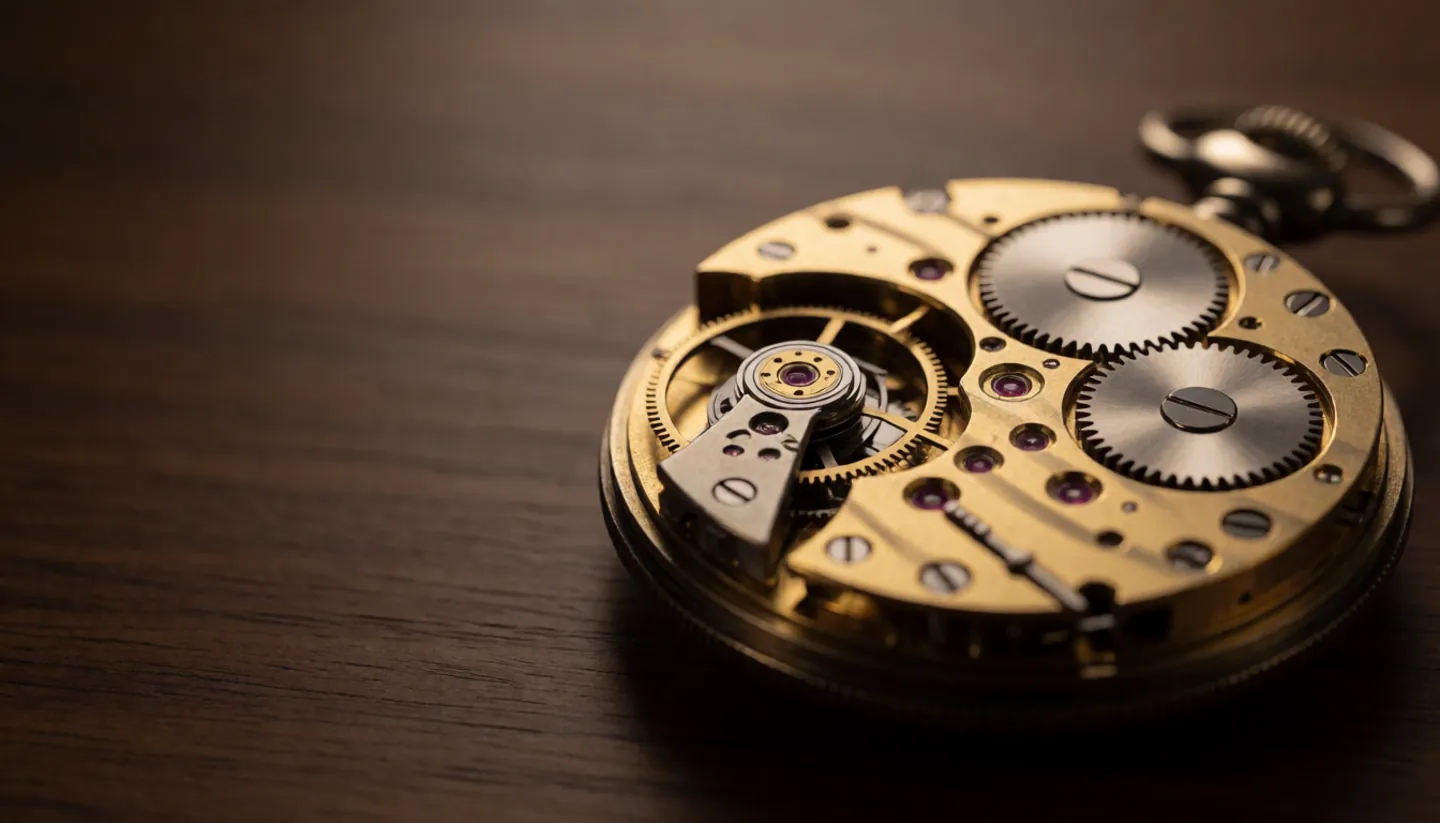
In a mechanical watch, tiny drilled stones hold the pivots of the fastest-moving parts. They were chosen not for sparkle but because hard stone wears far more slowly than brass.
THE SHORT ANSWER
A watch's wheels turn on pivots in holes.
Those holes are where the wear happens.
THE JOB
The Science Museum Group explains that in better watches, bearing surfaces such as pivot holes can be made from precious stones like ruby because they are hardwearing.
How it worksTHE STONE
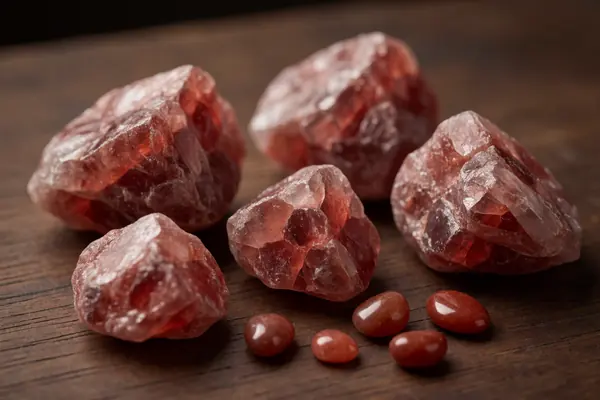
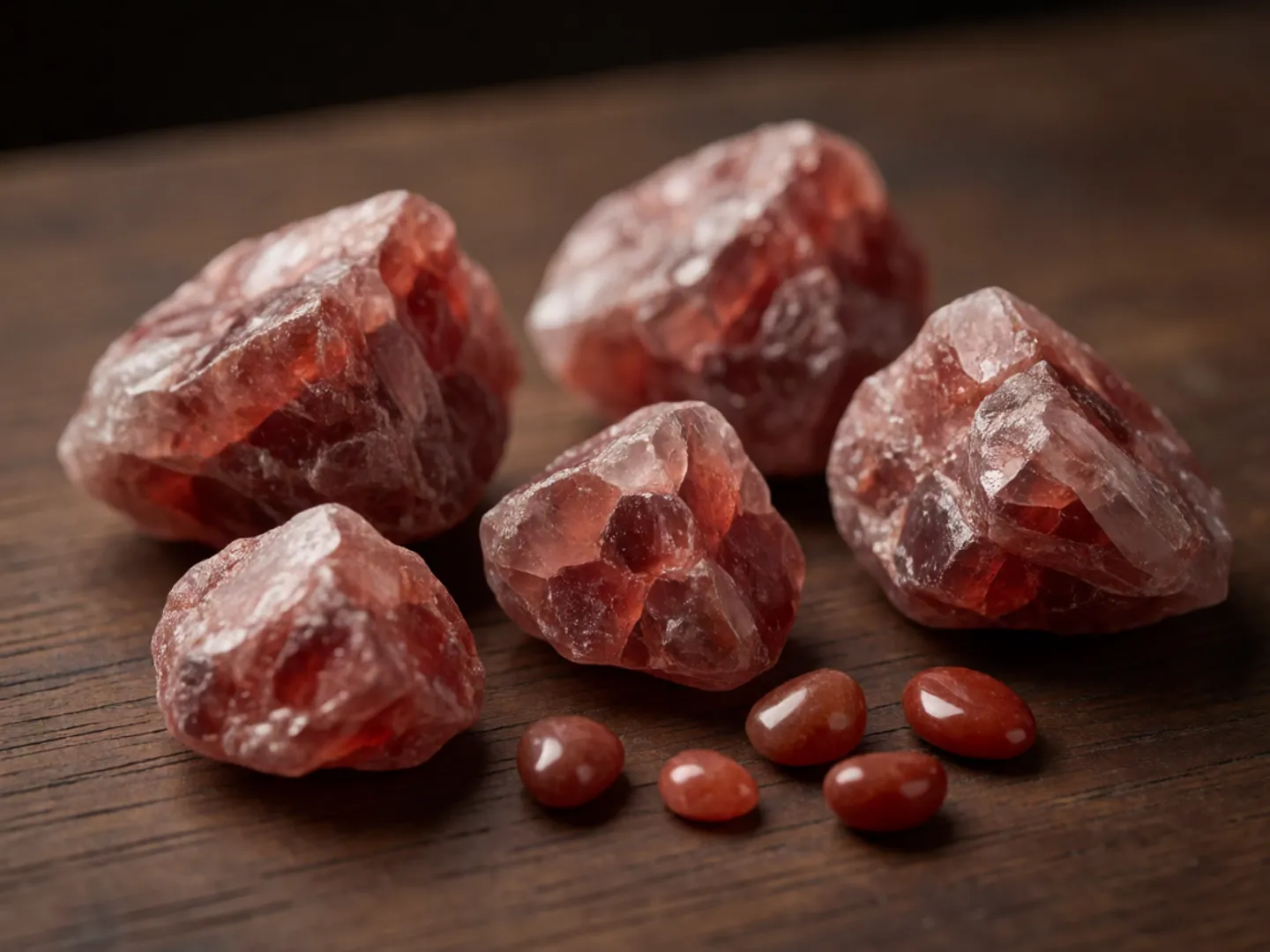
GIA says ruby and sapphire are both varieties of the mineral corundum. Chromium is the trace element that makes ruby red.
See the numbersTHE FIT
Pivots came in many sizes, each needing a jewel of matching fit. Victorian London jewellers sold gauges to measure jewel holes.
Follow the historyA SHORT HISTORY
Pick a moment in the story of watch jewels. The bar shows how widely jewelled bearings were being used at the time.
Based on The Metropolitan Museum of Art and the Science Museum Group Collection.
WHAT TO LOOK FOR
If you can see a mechanical movement, in a museum case or through a clear back, a few details tell the story.
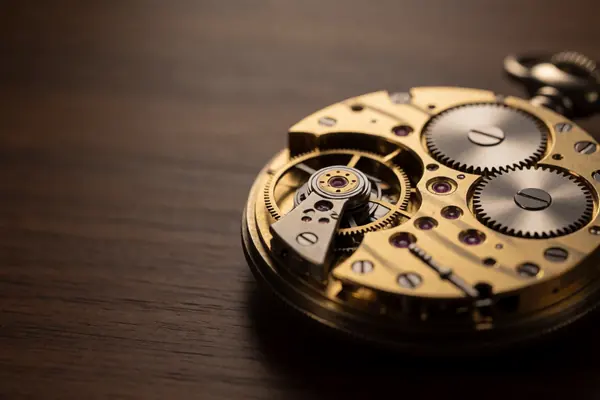
Small red stones set in the plates mark pivot holes. In older watches you may also see a stone set in the balance cock.
The oscillating balance is where the early patent focused: a half-drilled stone gave its staff a durable pivot.
Some old movements record the number of jewels. A Met watch from about 1832 is engraved with its count of rubies.
A flat endstone over a jewel hole holds the end of a pivot. One Victorian London watch used a diamond cap jewel on its balance.
TWO NUMBERS WORTH KNOWING
One date for the first patent,
one gap between two watchmaking nations.
1704
Year of the jewel patent
In May 1704 Fatio and the Debaufres petitioned Parliament for a patent, number 371, to drill gemstones for use as bearings in watches and clocks.
THE PATENT · THE MET
≈ 100 years
England ahead of Switzerland by
English makers kept using jewelled endstones through the 1700s, about a century before jewels came into general use in Swiss watches.
THE GAP · THE MET
A Met watch by Daniel Delander, dated before 1720, has a half-drilled pink diamond endstone holding the pivot of the balance staff.
HOW IT WORKS
The early method embedded a half-drilled gemstone in the brass cock of a movement, giving a durable hole for the end of the oscillating balance staff. The advantage over brass or precious metal was the hardness of the stone.
Corundum is colourless in its purest form; trace elements change the colour. Ruby's red comes from chromium, and the more chromium, the stronger the red.
Questions
They are there for a job, not for value. They act as hardwearing bearings for pivots, which brass alone would wear faster.
Ruby is a hard gem, a variety of the mineral corundum, like sapphire. Hard stone makes a durable pivot hole.
A patent to drill gemstones as watch bearings was sought in London in 1704. The Clockmakers' Company opposed extending it, claiming the idea was not new.
No. Jewels were used in better quality watches. English makers used jewelled endstones through the 1700s; Swiss makers took them up in the early 1800s.
No. The Science Museum Group holds sample jewel bearings made for electric meters, dated 1937.
Updated
ABOUT THIS NAME
tabjewel.com is part of the DoodleSale portfolio. It isn't in an auction right now, but you can ask about leasing it.